
Understanding Legal Processes in Japan: Beyond Terminology
Why language and structure matter in company formation and legal procedures
When entering the Japanese market, many legal concepts appear familiar at first glance.
However, in practice, the challenge is often not the law itself — but how it is applied, communicated, and documented.
1. Legal Structure vs. Practical Execution
Japan offers a highly structured and reliable legal framework.
However, legal effectiveness often depends on formal procedures such as registration.
- Company formation is completed through registration
- Property ownership becomes enforceable through registration
👉 Understanding this distinction is essential for planning timelines and responsibilities.
2. The Role of Language in Legal Processes
A key factor often underestimated is language.
Most legal procedures in Japan are conducted in Japanese:
- official forms
- registry submissions
- communication with authorities
For international clients, this creates a structural barrier:
- documents may be understood conceptually, but not in legal nuance
- small translation differences can affect acceptance
👉 Legal processes are therefore not only procedural, they are also linguistic.
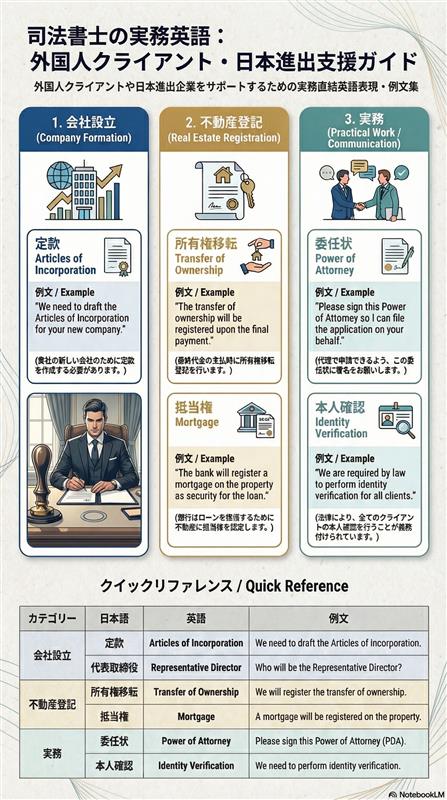
3. Power of Attorney as a System Element
To manage this complexity, Powers of Attorney are widely used.
They allow licensed professionals to:
- represent clients in filings
- ensure compliance with formal requirements
- bridge both legal and language gaps
4. Practical Insight (Professional Perspective)
In practice, challenges rarely arise from legal complexity alone.
More often, they result from:
- coordination between multiple parties
- document preparation across jurisdictions
- alignment between legal requirements and client expectations
👉 This is where international and legal expertise intersect.
5. Case-Based Observation
In many projects, delays are not caused by the process itself, but by:
- missing or slightly incorrect documentation
- misunderstandings in translation
- unclear expectations about procedural steps
Even small inconsistencies can lead to additional review cycles.
Conclusion
Japan’s legal system is transparent and reliable — but highly structured.
For international companies, success depends on:
- understanding procedural requirements
- managing language barriers
- coordinating documentation effectively
👉 We support international clients in navigating both the legal and practical aspects of doing business in Japan.